
The Question Every Homeowner Asks First
You've been dreaming about a new kitchen for months — maybe years. You've browsed Pinterest boards, visited showrooms, and finally decided it's time. But before you commit, there's one question that stops almost everyone in their tracks: how long is this actually going to take?
It's a fair question. Your kitchen is the most-used room in your home, and being without it for weeks (or longer) affects your entire household. The truth is, kitchen remodel timelines vary widely depending on the scope of work, but understanding what goes into each phase can help you plan realistically and avoid frustration.
Here's what San Diego homeowners should expect when planning a kitchen renovation from the first consultation to the final walkthrough.
Phase 1: Design and Planning (2–6 Weeks)
This is the phase most people underestimate. Before a single cabinet is removed, there's a significant amount of planning that needs to happen. During this stage, you'll work with your remodeling team to finalize the layout, choose materials, select appliances, and establish a detailed scope of work.
Key tasks during this phase include:
- Initial consultation and site assessment
- Design development and layout planning
- Material and finish selections (countertops, cabinetry, tile, fixtures)
- Appliance ordering
- Budget finalization and contract signing
If you're making significant layout changes — like moving a wall or relocating plumbing — this phase may take longer because structural and engineering considerations come into play. Homeowners who come prepared with a clear vision and make decisions promptly tend to move through this stage faster.
A Note on Lead Times
One of the biggest timeline factors is material lead times. Custom cabinetry, for example, can take 4–8 weeks to manufacture and deliver. Specialty tile, imported fixtures, and certain countertop materials can also add weeks to your timeline. Your remodeling team should order long-lead items as early as possible to keep the project on track.
Phase 2: Permitting (1–3 Weeks)
Most kitchen remodels in San Diego require at least one permit, especially if you're altering electrical, plumbing, or structural elements. The City of San Diego's Development Services Department handles residential permits, and processing times can vary depending on the complexity of the project and current workload.
A straightforward permit for minor electrical or plumbing changes might be approved in a few days. More complex projects involving structural modifications could take two to three weeks. Your contractor should handle the permitting process, but it's important to factor this time into your overall expectations.
Phase 3: Demolition and Rough Work (1–2 Weeks)
This is when things get real. Demolition is often the most dramatic phase — old cabinets, countertops, flooring, and sometimes walls come out. It's loud, dusty, and exciting all at once.
After demolition, the rough work begins. This includes:
- Framing changes (if walls are being moved or opened up)
- Rough plumbing (relocating water lines, drains, or gas lines)
- Rough electrical (adding circuits, moving outlets, recessed lighting placement)
- HVAC adjustments if needed
Once the rough work is complete, it needs to pass inspection before the project moves forward. Scheduling inspections promptly is important to avoid unnecessary delays.
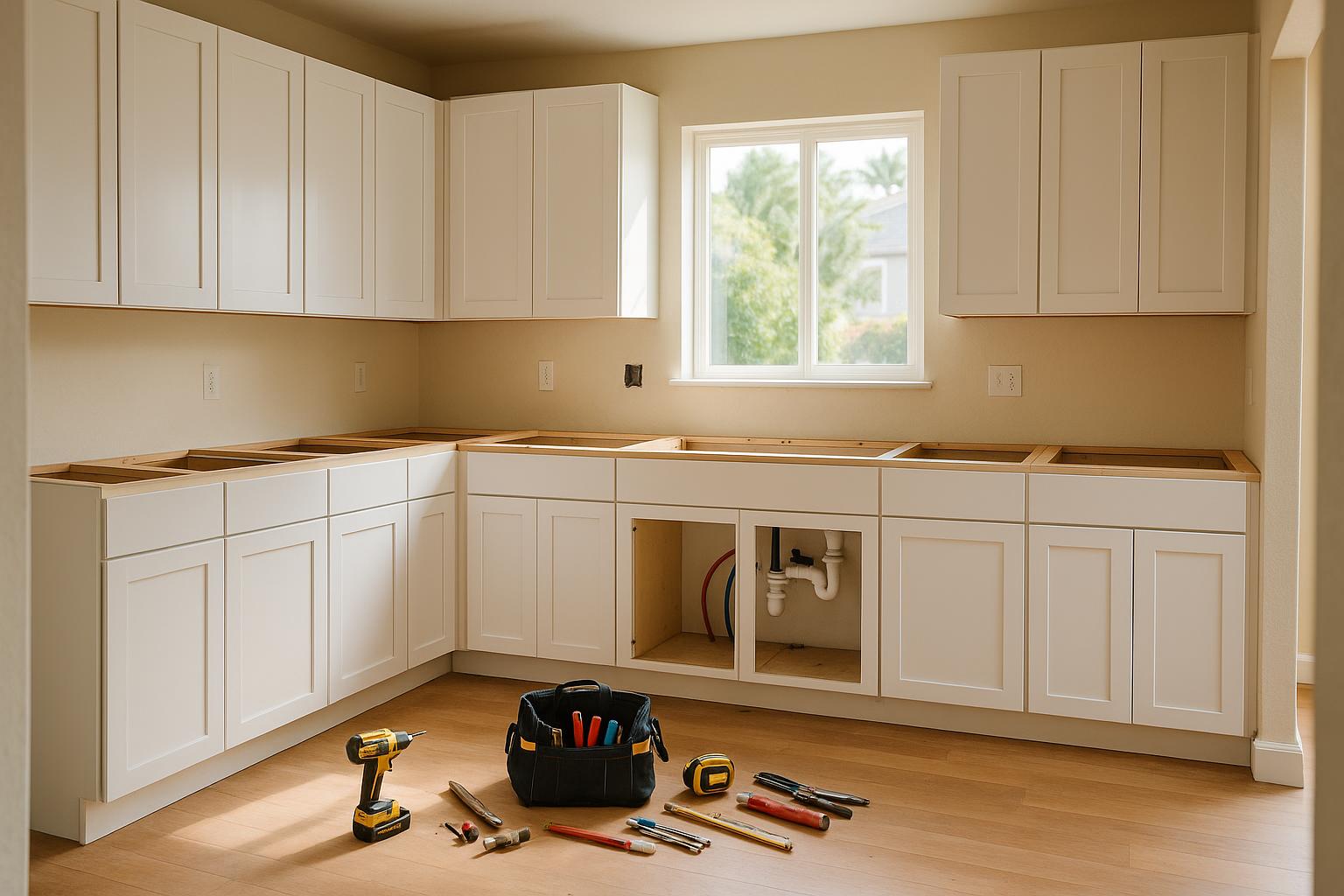
Phase 4: Installation (3–5 Weeks)
This is the longest phase and where your new kitchen truly starts to take shape. Installation happens in a specific order, and each step depends on the one before it.
- Drywall and patching: Any new or repaired walls are finished and painted.
- Flooring: New flooring goes in before cabinetry in most cases, though this can vary based on the material.
- Cabinetry: Base and wall cabinets are installed and leveled.
- Countertops: After cabinets are set, countertops are templated and then fabricated. There's typically a 1–2 week gap between templating and installation for stone or quartz surfaces.
- Backsplash and tile work: Tile installation happens after countertops are in place.
- Fixtures and appliances: Sinks, faucets, lighting, and appliances are installed last.
Each trade — carpenters, electricians, plumbers, tile setters — needs to work in sequence. A well-managed project keeps these trades coordinated so there's minimal downtime between steps.
Phase 5: Final Details and Walkthrough (3–5 Days)
The final phase includes touch-up painting, hardware installation, final electrical and plumbing connections, and a thorough cleaning. Your contractor should walk through the entire project with you to create a punch list — a record of any minor items that need attention before the job is officially complete.
This walkthrough is your opportunity to inspect every detail. A reputable remodeling company will welcome this process and address every item on the list promptly.
So What's the Total?
For a typical mid-range kitchen remodel in San Diego, homeowners should plan for approximately 8 to 14 weeks from the start of construction to completion. When you include the design, planning, and permitting phases, the total timeline from first meeting to finished kitchen is more like 12 to 20 weeks.
Larger projects — such as those involving room expansions, structural changes, or high-end custom finishes — can take longer. Smaller cosmetic updates like refacing cabinets and replacing countertops might wrap up in as little as 4 to 6 weeks.
What Causes Delays (and How to Avoid Them)
Even the best-planned projects can hit bumps. Here are the most common causes of delays and how to minimize them:
- Indecision on materials: Finalizing all selections before construction begins is the single best way to keep your project on schedule.
- Backordered products: Supply chain issues still affect certain materials. Ordering early and having backup options helps.
- Unexpected conditions: Older San Diego homes sometimes reveal surprises behind walls — outdated wiring, water damage, or non-code plumbing. A contingency budget and flexible mindset go a long way.
- Permit delays: These are largely out of your contractor's control, but experienced local contractors know how to navigate the process efficiently.
- Scope changes mid-project: Adding work after construction has started almost always extends the timeline. Try to finalize your wish list during the planning phase.
The Bottom Line
A kitchen remodel is a significant investment of both money and time, but the payoff is enormous. A well-designed kitchen improves how you cook, entertain, and live every day. Understanding the realistic timeline helps you plan your life around the project — arranging temporary cooking setups, scheduling around holidays, or coordinating with family needs.
At Stone Creek Foundation, we walk San Diego homeowners through every phase of the process with clear communication and honest timelines. No surprises, no guesswork — just quality craftsmanship delivered on a schedule you can count on. If you're considering a kitchen remodel, reach out for a consultation and we'll help you map out a plan that works for your home and your life.