
Yes, You Can Remodel Without Moving Out
One of the most common concerns we hear from San Diego homeowners is simple: Do I have to move out during a remodel? The short answer is no — most people stay in their homes throughout the entire project. But living through a renovation takes some planning, flexibility, and a contractor who respects your daily life.
Whether you're updating a kitchen, renovating a bathroom, or tackling a whole-home transformation, there are practical steps you can take to keep your household running smoothly while the work gets done. Here's what we've learned from years of remodeling occupied homes across San Diego, Chula Vista, La Mesa, and the surrounding communities.
Set Up a Temporary Kitchen Before Demo Day
If your kitchen is the project zone, eating at restaurants for eight weeks straight isn't realistic (or affordable). Instead, set up a mini kitchen in another room before demolition begins.
- Move your microwave, toaster oven, and coffee maker to a spare bedroom, dining room, or garage.
- Set up a folding table with your most-used pantry items, paper plates, and utensils.
- Use a cooler or mini fridge to keep essentials cold if your main refrigerator is being relocated.
- Stock up on easy meals — think slow cooker recipes, sandwiches, and meal prep you can do in advance.
It's not glamorous, but a little preparation goes a long way toward keeping your family fed and your stress levels down.
Create Clear Boundaries Between Living and Work Zones
Dust is the number one complaint homeowners have during a remodel, and for good reason. Construction dust gets everywhere — into closets, onto electronics, and into your lungs if you're not careful.
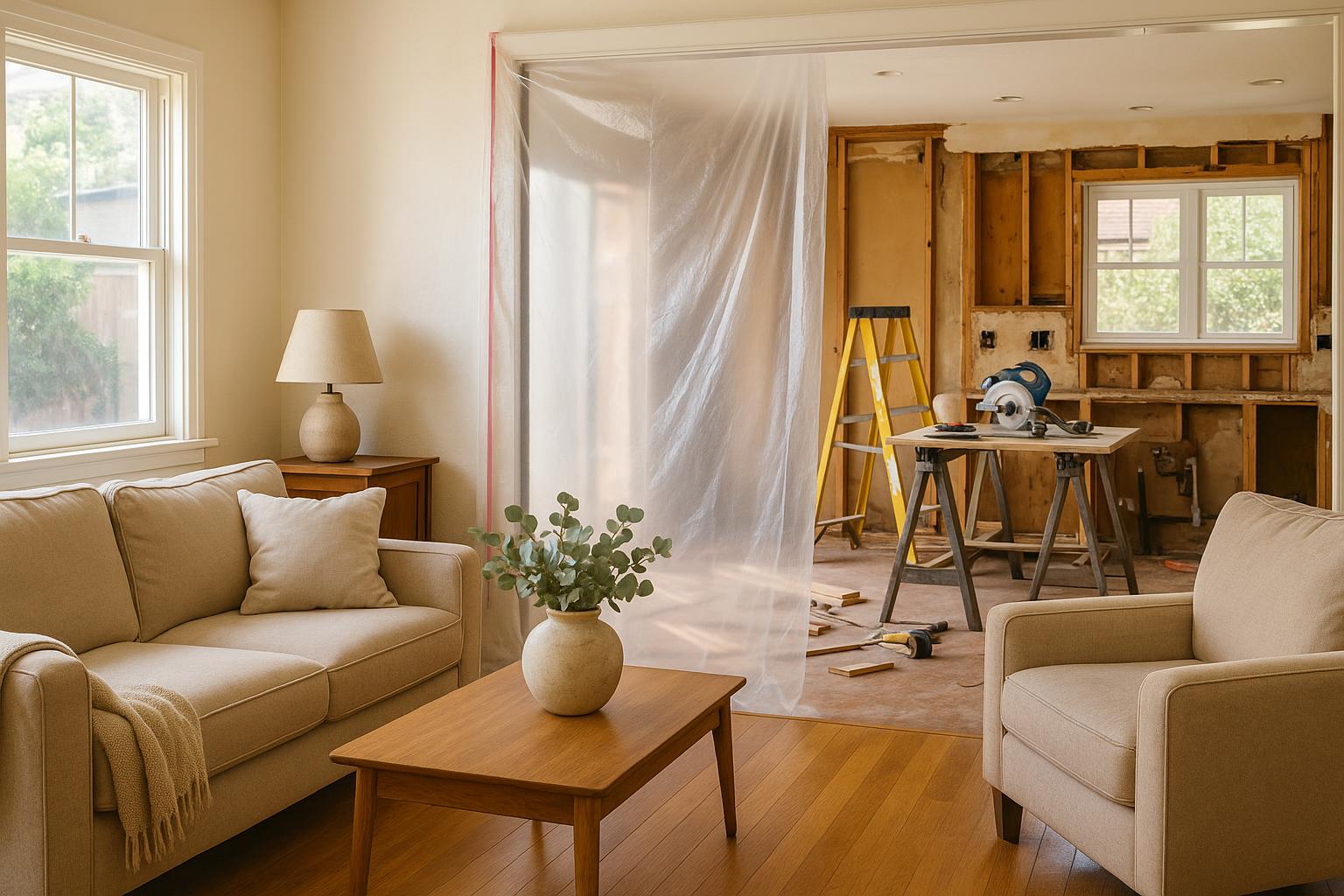
A good contractor will hang plastic sheeting and use dust barriers to contain the work area, but you can help by taking a few extra steps:
- Seal gaps around doors leading to the construction zone with painter's tape.
- Cover furniture in adjacent rooms with drop cloths or old sheets.
- Change your HVAC filters more frequently during the project — construction dust clogs them fast.
- Keep windows cracked in your living spaces when weather permits, especially during San Diego's mild fall and spring months.
Establishing a firm boundary between where you live and where the work happens makes the whole experience more manageable.
Plan for Bathroom Logistics
Bathroom renovations create an obvious problem: you need a functioning bathroom. If you have a second bathroom in the house, the solution is straightforward — everyone shares one bathroom for a few weeks. If you only have one bathroom, talk to your contractor about phasing the work so you always have access to a working toilet and shower, even if it means the project takes slightly longer.
This is one of those details that should be discussed before the contract is signed, not on demo day. At Stone Creek Foundation, we walk through these logistics during the planning phase so there are no surprises once work begins.
Protect Kids, Pets, and Your Sanity
Construction zones are genuinely dangerous for curious toddlers and pets. Power tools, exposed nails, and open subfloors are real hazards. Here's how to keep everyone safe:
- Use baby gates or locked doors to block access to the work area.
- Establish a pet-safe room away from the noise and dust — some dogs and cats get extremely anxious around construction sounds.
- Set a daily routine that gets kids and pets out of the house during the loudest hours, typically early morning when demolition or cutting happens.
If you work from home — and many San Diego residents do — ask your contractor about the daily schedule so you can plan calls and focused work around the noisiest tasks.
Communicate With Your Contractor Constantly
Living in a home during a remodel means you'll interact with your construction team almost every day. That's actually a good thing. It gives you the chance to ask questions, see progress in real time, and flag concerns before they become costly changes.
But communication works both ways. A few ground rules help everyone:
- Agree on working hours upfront. Most crews in San Diego start between 7:00 and 8:00 AM. If that's too early for your household, say so before the project begins.
- Designate one point of contact. Having one person in the household communicate with the project manager prevents mixed signals and conflicting requests.
- Ask for weekly updates. Even a quick five-minute walkthrough at the end of each week helps you understand what's coming next and whether the timeline is on track.
The best remodeling experiences we've seen come from homeowners who stay informed and engaged without micromanaging every nail.
Know When Moving Out Actually Makes Sense
While most projects can be completed with you in the home, there are exceptions. If your remodel involves major structural work — like removing load-bearing walls, replacing the roof, or a full gut renovation — it may be safer and more efficient to stay elsewhere for a portion of the project.
In those cases, even a short-term rental or a week with family in Coronado or El Cajon can give the crew uninterrupted access and speed up the timeline. We always advise our clients honestly about whether staying or leaving makes the most sense for their specific project.
The Bottom Line: Preparation Makes All the Difference
Living through a remodel isn't always comfortable, but it doesn't have to be miserable. The homeowners who have the smoothest experiences are the ones who plan ahead, set expectations with their families, and work with a contractor who communicates openly.
If you're considering a kitchen remodel, bathroom renovation, or larger project in San Diego, we'd love to walk you through what the process actually looks like — including the parts nobody talks about. At Stone Creek Foundation, we believe an informed homeowner is a happy homeowner, and we're here to make the entire journey as stress-free as possible.
Ready to start planning? Reach out to our team for a free consultation and let's talk about how to make your remodel work around your real life.